Límite de anchuraJapón

Aprende normas de tráfico con explicaciones claras y ejemplos visuales en nuestro libro ilustrado, diseñado para que estudiar sea sencillo y ameno.


35. Límite de anchura

Un límite de anchura prohíbe entrar o pasar por un tramo, puente, túnel, portal u otro paso estrecho a los vehículos o conjuntos cuya anchura total supere el valor indicado. La anchura incluye la carga y cualquier equipo u objeto que sobresalga por los lados.

Los conductores deben conocer la anchura máxima de circulación de su vehículo y carga, observar las advertencias previas y utilizar una ruta alternativa cuando sea necesario. Nunca deben entrar cuando no esté garantizada una separación lateral suficiente.
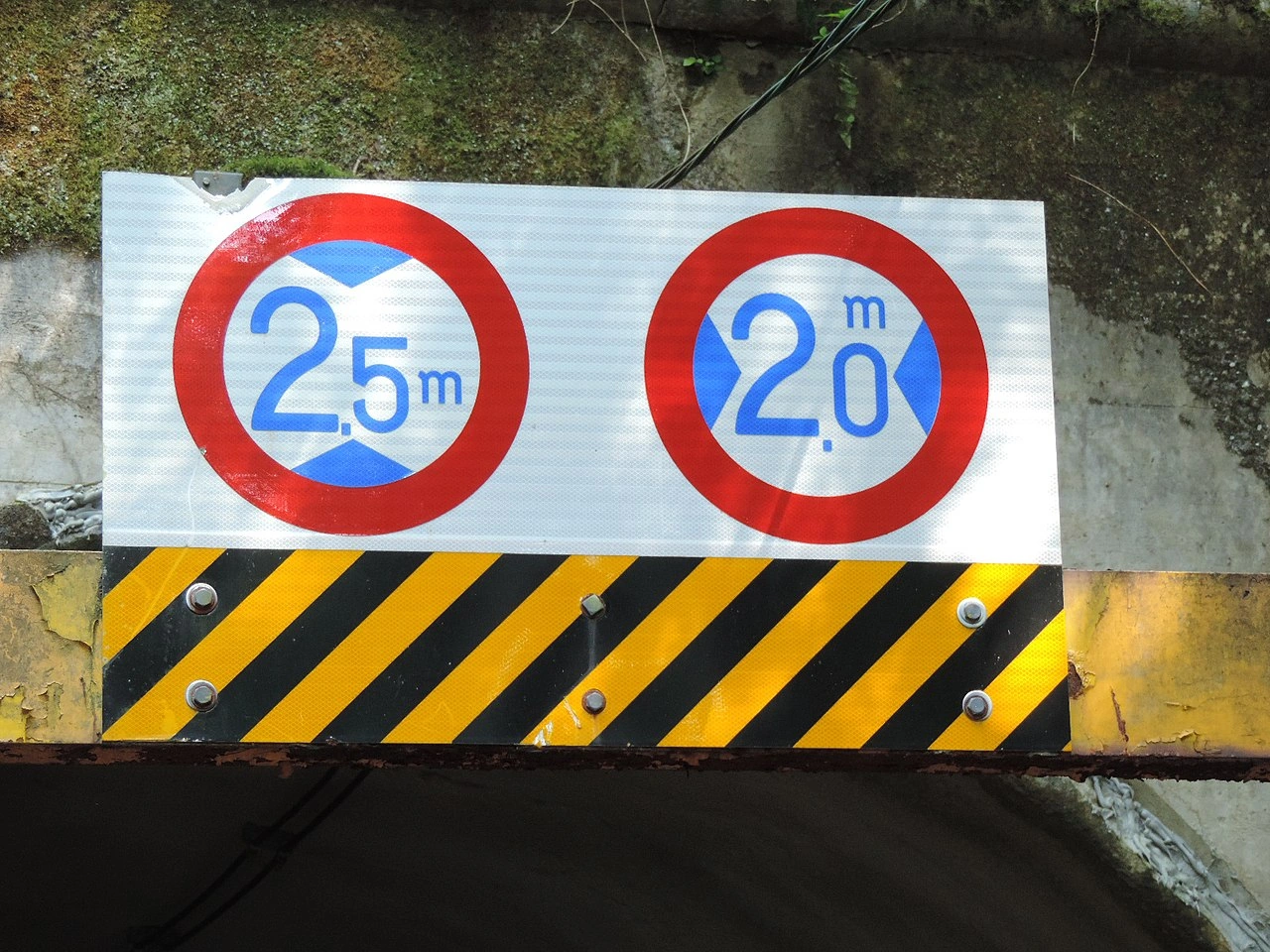
Límite de anchura
What does a width-limit sign mean?

It prohibits vehicles or vehicle combinations whose total width exceeds the displayed value from continuing beyond the sign.

How can you recognise a width-limit sign?

It is commonly a circular regulatory sign showing a width in metres, feet or another local unit between horizontal arrowheads.

What is included in the vehicle’s total width?

The width includes the vehicle, its load and attached equipment or objects that extend from either side.

Does the width of a trailer count?

Yes. Every part of the vehicle combination must comply, including the towing vehicle, trailer and load.

Do roof-mounted bicycles or equipment count?

Yes, when they extend beyond the sides of the vehicle. Drivers must consider the widest point of the complete travelling vehicle.

Does an open vehicle door affect the legal width?

Doors should be closed while driving. The ordinary travelling width is measured with the vehicle properly configured for road use.

Does the sign show the exact width of the passage?

Not necessarily. It shows the maximum legally permitted vehicle width. The physical passage may be wider, but drivers should not assume that additional clearance is available.

May a vehicle exactly as wide as the displayed value pass?

The sign normally prohibits vehicles wider than the displayed value. However, drivers should not attempt to pass without a practical safety margin because measurements and vehicle movement may vary.

Why is additional clearance important?

A vehicle may move sideways because of steering corrections, road camber, wind, suspension movement or an uneven surface.

Can the available width vary along the passage?

Yes. Walls, barriers, columns, bends, kerbs and protruding structures may make one part narrower than another.

Can different lanes have different width limits?

Yes. Lane-specific signs may impose different restrictions where the available width varies between lanes.

Can roadworks introduce a temporary width limit?

Yes. Barriers, machinery and shifted lanes may reduce the usable width. Temporary width-limit signs must be obeyed.

Is a width-limit sign a warning or a prohibition?

It is normally a prohibition. A vehicle that exceeds the displayed width may not pass.

Does a width-limit sign impose a speed limit?

No. The applicable general, zonal or posted speed limit remains in force, although drivers should approach narrow passages slowly.

Does the sign change priority?

No. Traffic lights, priority signs and the ordinary priority rules remain applicable.

Can a width restriction be announced in advance?

Yes. An advance sign may show the restriction and the distance to it so that wide vehicles can choose another route.

What should you do when your vehicle is too wide?

Do not continue. Stop where safe and use the signed diversion or another suitable route.

Should you rely on a navigation system?

No. Navigation information may be outdated or incomplete. Traffic signs and actual road conditions always take precedence.

Should professional drivers know their vehicle’s width?

Yes. Drivers of trucks, buses, agricultural vehicles, motorhomes and vehicles carrying wide loads should know the maximum travelling width before beginning the journey.

How should the width be measured?

Measure the widest part of the vehicle and load in its normal travelling configuration. Consider equipment, securing devices and any load extending beyond the bodywork.

Can folding equipment reduce the width?

Yes. Mirrors, arms, steps or machinery designed to be folded or retracted should be placed in the legally required travelling position before driving.

May you change lanes to use a wider passage?

Only when signs and markings permit it and the manoeuvre can be completed safely. Do not cross a closed lane, continuous line or opposing traffic to avoid the restriction.

What should you do when uncertain about the width?

Stop before the restriction in a safe place and verify the vehicle’s dimensions. Choose another route when adequate clearance cannot be confirmed.

Should another person guide a wide vehicle?

A guide may help during a slow manoeuvre in a controlled location, but the driver remains responsible. The guide must remain visible and stay away from moving traffic and crushing hazards.

What should you do if the vehicle strikes a structure?

Stop immediately where safe, activate the hazard warning lights and contact the police or emergency services. Do not continue when the vehicle, load or structure may be damaged or unstable.

1 Japón 2 Autopista 3 Vía rápida 4 Zona 5 Límite de velocidad 6 Velocidad mínima 7 Senda peatonal 8 Carril bici 9 Vía compartida 10 Túnel 11 Carretera de peaje 12 Sentido único 13 Muelle 14 Pendiente 15 Carril bus 16 Parada de autobús 17 Señal de STOP 18 Ceda el paso 19 Glorieta 20 Estrechamiento de calzada 21 Paso de peatones 22 Paso a nivel 23 Dirección obligatoria 24 Prohibición de giro 25 Zona escolar 26 Adelantamiento 27 Cruce de animales 28 Calzada deslizante 29 Desprendimiento de rocas 30 Curva 31 Circulación en sentido contrario 32 Obras 33 Viento lateral 34 Límite de altura 35 Límite de anchura 36 Límite de peso 37 Señal de control de velocidad 38 Barreras selectivas 39 Señal de dirección en intersección 40 Semáforos 41 Advertencia de semáforos 42 Semáforos peatonales 43 Marcas viales 44 Permiso de conducir 45 Marcador de ubicación 46 Espejo de tráfico 47 Teléfono de emergencia 48 Ruta ciclista 49 Estacionamiento 50 Prohibido estacionar 51 Prohibido parar 52 Estacionamiento para personas con discapacidad 53 Gestión del tráfico 54 Marcha atrás 55 Cambio de sentido 56 Intersección sin regulación 57 Estado de la calzada 58 Permiso provisional 59 Salida de emergencia 60 Límite de población 61 Claxon 62 Matrícula 63 Estación de carga 64 Peligros 65 Peatón 66 Ciclista 67 Ciclomotor 68 Motocicleta 69 Turismo 70 Camión 71 Autobús 72 Policía 73 Ambulancia 74 Bache 75 Camino 76 Partículas 77 Contaminación del aire 78 Hora punta 79 Código de circulación 80 Doble sentido 81 Canaleta de la calle 82 Bicicleta de carga 83 Vehículo forestal 84 Vehículo de construcción 85 Camión articulado 86 Trolebús 87 Speed pedelec 88 Vehículo de reparto 89 Motor al ralentí 90 Grúa 91 Tracción a las cuatro ruedas 92 Prohibido el paso de vehículos 93 Bicicleta 94 Equipamiento de motocicleta 95 Tranvía 96 Vía férrea 97 Caravana 98 Remolque 99 Enganche de remolque 100 Camión de bomberos ...