Feux pour piétonsChine

Apprenez les règles de circulation avec des explications claires et des exemples visuels dans notre livre illustré, simple et agréable à étudier.


34. Feux pour piétons

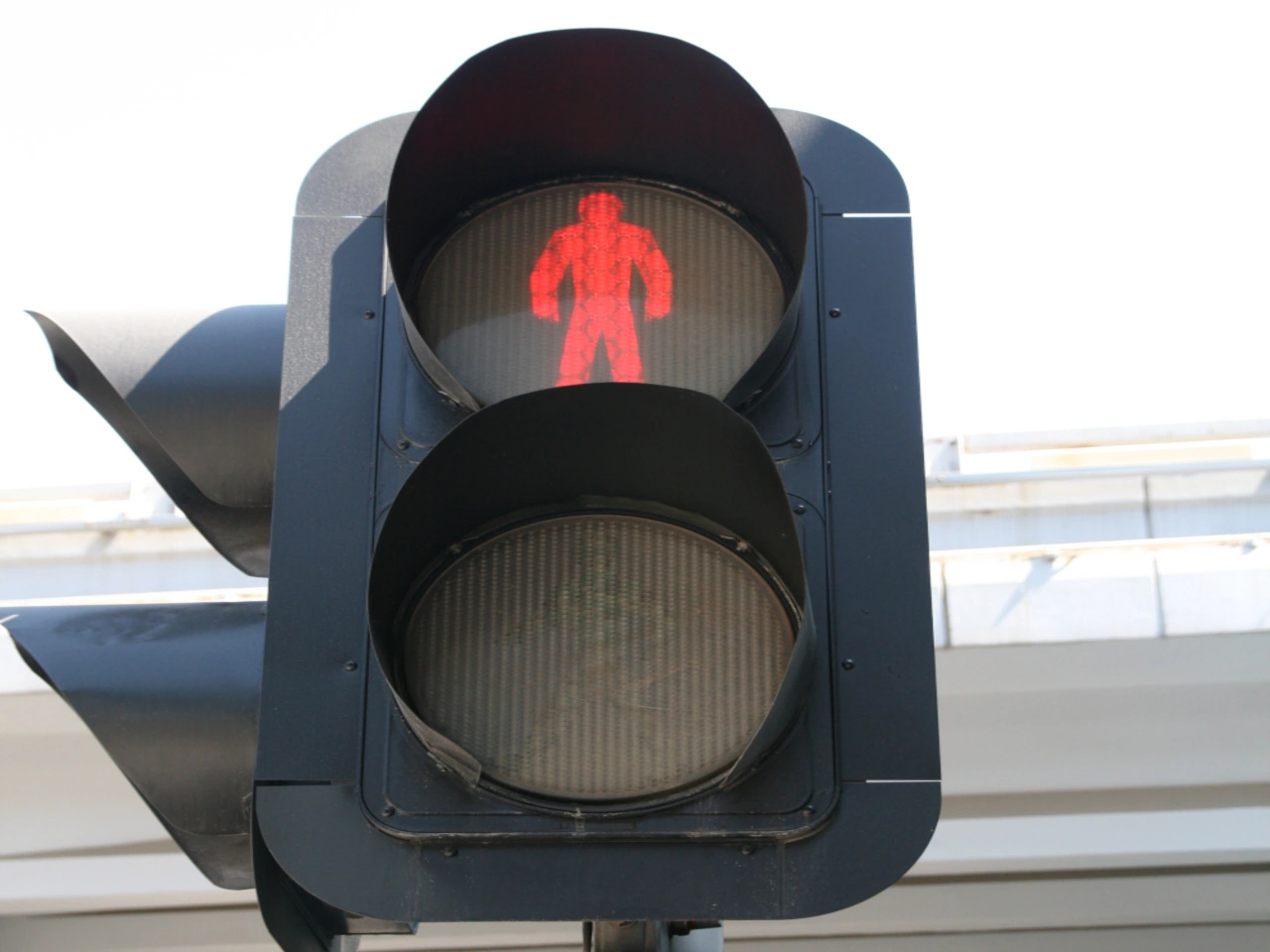
Les feux pour piétons sont des signaux qui règlent le moment où les piétons peuvent commencer à traverser une route. Ils affichent normalement une silhouette rouge immobile pour interdire de commencer la traversée et une silhouette verte en marche pour l’autoriser.

Un signal clignotant ou un compte à rebours peut avertir que la période autorisée se termine. Les piétons doivent traverser sans retard inutile, tandis que les conducteurs qui tournent doivent rester attentifs et permettre aux piétons engagés légalement de terminer leur traversée en sécurité.
Feux pour piétons
What are pedestrian lights?

Pedestrian lights are traffic signals that indicate when pedestrians may begin crossing a road.

How can you recognise pedestrian lights?

They commonly display a red standing person and a green walking person. Their design may vary between countries.

What does the red pedestrian light mean?

It means that pedestrians must not begin crossing.

What does the green pedestrian light mean?

It means that pedestrians may begin crossing, provided they still observe the road and cross without unnecessary delay.

Does green guarantee that no vehicle will cross your path?

No. Turning vehicles, emergency vehicles or traffic following another authorised signal may still cross the pedestrian route. Pedestrians should remain attentive.

What does a flashing green pedestrian light mean?

It normally warns that the permitted crossing period is about to end. Pedestrians who have not started should consider waiting for the next green signal.

What does a flashing red pedestrian light mean?

Its meaning varies between countries. It commonly means that pedestrians must not begin crossing, while those already on the road should finish without delay.

What does a countdown display mean?

A countdown may show approximately how much time remains before the signal changes. It does not remove the duty to cross cautiously.

May you begin crossing when the countdown is nearly finished?

Begin only when there is enough time to cross safely and without stopping unnecessarily on the road. Waiting for the next green phase may be safer.

What if the signal changes to red while you are crossing?

Continue crossing at a normal pace towards the nearest safe side. Do not turn back suddenly, stop unnecessarily or run into another traffic stream.

Must drivers allow pedestrians to finish crossing?

Yes. Drivers should allow pedestrians who entered lawfully to complete the crossing safely, even when vehicle traffic receives permission to proceed.

May turning drivers cross during the pedestrian green phase?

Some signal systems permit turning vehicles and pedestrians at the same time. Turning drivers must give way where required and must not endanger pedestrians.

What is a conflict-free pedestrian phase?

It is a signal phase during which conflicting vehicle movements are stopped so pedestrians can cross without permitted traffic turning across their route.

What is an all-pedestrian phase?

It is a phase in which pedestrians may cross several or all approaches while vehicle traffic is stopped. Diagonal crossing is permitted only when the signals and markings allow it.

What do arrows around a pedestrian symbol mean?

They may indicate that the same pedestrian signal applies simultaneously to several crossing directions. The exact meaning depends on local law.

What should pedestrians do before stepping onto the road?

Check that approaching and turning vehicles are stopping and that the route is clear. A green signal does not make a collision impossible.

Must pedestrians cross without delay?

Yes. They should proceed at a normal pace and should not linger, stop unnecessarily or obstruct traffic on the crossing.

What if there are no pedestrian lights?

Pedestrians may have to follow the traffic lights controlling vehicles, an authorised officer or the ordinary pedestrian-crossing rules.

What is a pedestrian push button?

A push button normally registers a request for a pedestrian crossing phase. Pressing it does not itself permit crossing; pedestrians must wait for the appropriate signal.

Does repeatedly pressing the button make the signal change faster?

Normally not. Once the request has been registered, additional presses usually have no effect.

What are audible pedestrian signals?

Audible signals use sounds to help pedestrians with visual impairments identify when crossing is permitted or when the signal is changing.

What are tactile pedestrian signals?

Tactile signals may use a vibrating button, rotating cone or raised markings to provide crossing information to pedestrians with visual impairments.

Do pedestrian lights apply to cyclists?

Not normally. A cyclist riding a bicycle must follow the applicable cycle or vehicle signal unless a combined pedestrian-and-cycle signal applies.

What if a cyclist walks beside the bicycle?

A person walking beside a bicycle is normally treated as a pedestrian and follows the pedestrian signal.

What are combined pedestrian-and-cycle lights?

They display pedestrian and bicycle symbols and apply to the road users indicated by those symbols.

May pedestrians cross when an authorised officer signals them to wait?

No. Instructions from an authorised traffic controller normally take precedence over pedestrian lights.

What should you do when the pedestrian lights are not working?

Cross only according to the functioning vehicle signals, priority rules and instructions from authorised personnel. Proceed cautiously and take approaching traffic into account.

1 Chine 2 Autoroute 3 Voie rapide 4 Zone résidentielle 5 Limitation de vitesse 6 Chemin piéton 7 Piste cyclable 8 Tunnel 9 Route à péage 10 Pente 11 Voie de bus 12 Arrêt de bus 13 Panneau Stop 14 Cédez le passage 15 Rond-point 16 Rétrécissement de chaussée 17 Passage pour piétons 18 Passage à niveau 19 Direction obligatoire 20 Interdiction de tourner 21 Zone scolaire 22 Chutes de pierres 23 Virage 24 Chevron 25 Circulation à contresens 26 Travaux routiers 27 Vent latéral 28 Limitation de hauteur 29 Limitation de poids 30 Panneau de contrôle radar 31 Priorité au prochain carrefour 32 Feux de circulation 33 Avertissement de feux de circulation 34 Feux pour piétons 35 Permis de conduire 36 Repère de localisation 37 Miroir routier 38 Stationnement 39 Stationnement interdit 40 Arrêt interdit 41 Stationnement pour personnes handicapées 42 Marche arrière 43 Demi-tour 44 Carrefour non réglementé 45 Permis provisoire 46 Issue de secours 47 Voie de détresse 48 Klaxon 49 Limite de charge par essieu 50 Station de recharge 51 Piéton 52 Moto 53 Voiture 54 Camion 55 Autobus 56 Police 57 Ambulance 58 Taxi 59 Signaux de police 60 Nid-de-poule 61 Chemin 62 Particules 63 Pollution de l’air 64 Heure de pointe 65 Code de la route 66 Caniveau 67 Vélo cargo 68 Véhicule forestier 69 Véhicule de chantier 70 Ensemble semi-remorque 71 Trolleybus 72 Speed pedelec 73 Véhicule de livraison 74 Moteur au ralenti 75 Dépanneuse 76 Quatre roues motrices 77 Vélo 78 Équipement de moto 79 Voie ferrée 80 Caravane 81 Remorque 82 Attelage 83 Camion de pompiers 84 Sirène 85 Convoi 86 Feux des véhicules d’urgence 87 Machines agricoles 88 Vélo électrique 89 Véhicule électrique 90 Pedelec 91 Quadricycle 92 Voiturette 93 Véhicule tout-terrain 94 Fourgonnette 95 Véhicule de loisirs 96 Scooter 97 Trikke 98 Engin de déplacement personnel 99 Skateboard 100 Segway ...