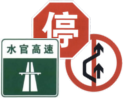
Passage à niveauChine

Apprenez les règles de circulation avec des explications claires et des exemples visuels dans notre livre illustré, simple et agréable à étudier.


18. Passage à niveau

Un passage à niveau est un endroit où une route ou un chemin croise des voies ferrées au même niveau. Il peut être protégé par des barrières, des feux d’avertissement, des sonneries, des panneaux de signalisation ou une combinaison de ces dispositifs.

Les usagers doivent approcher avec prudence et ne jamais s’engager lorsqu’un train approche, que les signaux d’avertissement sont actifs ou que la sortie est bloquée. Ils doivent traverser sans délai et ne jamais s’arrêter, attendre ou se retrouver immobilisés sur les voies.

What is a railway crossing?

A railway crossing is a place where a road or path crosses railway tracks at the same level.

What is another name for a railway crossing?

It may also be called a level crossing or, particularly in North America, a railroad crossing.

How can you recognise a railway crossing?

It may be indicated by warning signs, crossbuck signs, barriers, flashing lights, bells or road markings. The design differs between countries.

What is the difference between a crossing with and without barriers?

A protected crossing uses full or partial barriers to block road traffic when a train approaches. A crossing without barriers relies on signs, lights, bells or the road user’s own observation.

Must you always stop at a railway crossing?

Not necessarily. You must stop when required by lights, barriers, signs, an approaching train or an authorised person. At an unprotected crossing, slow down and proceed only after checking that no train is approaching.

What do flashing red lights mean?

Flashing red lights mean stop and do not enter the crossing. Remain stopped until the signal permits you to continue.

May you cross while a barrier is moving?

No. Do not enter while a barrier is lowering, rising or closed. Wait until the crossing is fully open and all prohibiting signals have stopped.

May you drive around a closed barrier?

No. Never drive, cycle or walk around or underneath a closed or moving barrier.

What does a warning bell mean?

A warning bell or audible signal normally means that the crossing is closing or that a train is approaching. Do not enter the crossing while it is sounding.

What does a flashing white light mean?

In some countries, a flashing white light indicates that the crossing equipment is operating and road users may pass when the route is clear. Its exact meaning depends on local law.

What should you do at a crossing without lights or barriers?

Reduce speed, look and listen carefully in both directions and cross only after making sure that no train or other rail vehicle is approaching.

May you cross immediately after a train has passed?

Not automatically. Another train may approach on a second track. Wait until all warning signals stop and the crossing is fully open.

What if traffic ahead is blocking the exit?

Do not enter the crossing unless there is enough room beyond the tracks for your entire vehicle. Never rely on traffic moving before a train arrives.

May you wait on the tracks?

No. Railway tracks must always remain clear. Do not stop because of congestion, traffic lights or another obstruction beyond the crossing.

May you overtake at a railway crossing?

Overtaking is often prohibited or restricted because another vehicle can obstruct the view of an approaching train or warning signal. Follow local signs and overtaking rules.

May you stop or park on a railway crossing?

No. Stopping or parking on the tracks creates an immediate and potentially fatal danger.

Do the crossing signals apply to pedestrians and cyclists?

Yes. Pedestrians and cyclists must obey barriers, lights, bells and authorised personnel in the same way as other road users.

Should cyclists ride across the tracks at an angle?

Where possible, cross the rails at an angle close to 90 degrees. Rails can trap a bicycle wheel, especially when they are wet or cross the road diagonally.

What should drivers of long vehicles check?

Make sure the entire vehicle and any trailer can clear the crossing without stopping. Consider the available space, road gradient, turning room and traffic beyond the tracks.

What should drivers of high vehicles check?

Observe all height restrictions and warning signs. Electrified railway lines may have overhead equipment that can be struck by an excessively high vehicle or load.

What should you do if the signals appear defective?

Treat the crossing with extreme caution. Do not assume that no train is approaching merely because the lights or barriers are not operating.

What should you do if your vehicle becomes stuck on the tracks?

Evacuate everyone immediately, move well away from the railway and contact the emergency services or railway operator. Do not remain in the vehicle or return for belongings.

Is a railway crossing the same as tram tracks in the road?

Not always. A railway crossing normally crosses tracks that are separate from the carriageway, while tram or street-running railway tracks may form part of the road itself.

1 Chine 2 Autoroute 3 Voie rapide 4 Zone résidentielle 5 Limitation de vitesse 6 Chemin piéton 7 Piste cyclable 8 Tunnel 9 Route à péage 10 Pente 11 Voie de bus 12 Arrêt de bus 13 Panneau Stop 14 Cédez le passage 15 Rond-point 16 Rétrécissement de chaussée 17 Passage pour piétons 18 Passage à niveau 19 Direction obligatoire 20 Interdiction de tourner 21 Zone scolaire 22 Chutes de pierres 23 Virage 24 Chevron 25 Circulation à contresens 26 Travaux routiers 27 Vent latéral 28 Limitation de hauteur 29 Limitation de poids 30 Panneau de contrôle radar 31 Priorité au prochain carrefour 32 Feux de circulation 33 Avertissement de feux de circulation 34 Feux pour piétons 35 Permis de conduire 36 Repère de localisation 37 Miroir routier 38 Stationnement 39 Stationnement interdit 40 Arrêt interdit 41 Stationnement pour personnes handicapées 42 Marche arrière 43 Demi-tour 44 Carrefour non réglementé 45 Permis provisoire 46 Issue de secours 47 Voie de détresse 48 Klaxon 49 Limite de charge par essieu 50 Station de recharge 51 Piéton 52 Moto 53 Voiture 54 Camion 55 Autobus 56 Police 57 Ambulance 58 Taxi 59 Signaux de police 60 Nid-de-poule 61 Chemin 62 Particules 63 Pollution de l’air 64 Heure de pointe 65 Code de la route 66 Caniveau 67 Vélo cargo 68 Véhicule forestier 69 Véhicule de chantier 70 Ensemble semi-remorque 71 Trolleybus 72 Speed pedelec 73 Véhicule de livraison 74 Moteur au ralenti 75 Dépanneuse 76 Quatre roues motrices 77 Vélo 78 Équipement de moto 79 Voie ferrée 80 Caravane 81 Remorque 82 Attelage 83 Camion de pompiers 84 Sirène 85 Convoi 86 Feux des véhicules d’urgence 87 Machines agricoles 88 Vélo électrique 89 Véhicule électrique 90 Pedelec 91 Quadricycle 92 Voiturette 93 Véhicule tout-terrain 94 Fourgonnette 95 Véhicule de loisirs 96 Scooter 97 Trikke 98 Engin de déplacement personnel 99 Skateboard 100 Segway ...