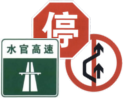
Interdiction de tournerChine

Apprenez les règles de circulation avec des explications claires et des exemples visuels dans notre livre illustré, simple et agréable à étudier.


20. Interdiction de tourner

Une interdiction de tourner empêche les conducteurs de tourner dans la direction indiquée par un panneau de signalisation. Elle peut interdire de tourner à gauche, à droite ou de faire demi-tour à une intersection ou sur une section de route déterminée.

Les conducteurs doivent poursuivre par un itinéraire autorisé et respecter les flèches de voie ou panneaux de direction obligatoire. Une interdiction de tourner ne détermine pas à elle seule la priorité ou la vitesse, et toute exemption concernant les cyclistes, transports publics ou autres usagers doit être expressément indiquée.

Interdiction de tourner
What is a turn prohibition?

A turn prohibition prevents drivers from making a particular turn or change of direction indicated by a traffic sign.

How can you recognise a turn-prohibition sign?

It is commonly a circular sign with a red border showing a crossed or barred turning arrow. The arrow indicates the movement that is prohibited.

What does a no-left-turn sign mean?

It prohibits drivers from turning left at the location or intersection to which the sign applies.

What does a no-right-turn sign mean?

It prohibits drivers from turning right at the location or intersection to which the sign applies.

What does a no-U-turn sign mean?

It prohibits drivers from turning around to travel in the opposite direction.

Is a prohibited turn the same as a mandatory direction?

No. A prohibition sign identifies a movement that may not be made. A mandatory-direction sign identifies the direction or directions that must be followed.

Is a turn prohibition the same as a no-entry sign?

No. A turn prohibition prevents a particular approach from turning into a road. A no-entry sign prohibits vehicles from entering the road from the direction where it is displayed.

Is a turn prohibition the same as one-way traffic?

No. A one-way rule controls the permitted direction along a road. A turn prohibition controls a particular movement at or near an intersection.

When does a turn prohibition apply?

It may apply at the sign, at the next intersection or throughout a stated section. Drivers must follow the sign design and the rules of the country concerned.

Can a turn prohibition be announced in advance?

Yes. An advance sign or supplementary distance panel may warn drivers that the prohibited turn is farther ahead.

Can the sign apply to only one lane?

Yes. A sign positioned above or clearly associated with one lane may apply only to drivers using that lane.

Do lane arrows also restrict turning?

Yes. Drivers must choose the correct lane and follow one of the directions displayed by its legally binding arrows.

Does a green traffic light permit a prohibited turn?

No. A green light permits traffic to proceed, but drivers must still respect turn prohibitions, lane arrows and other regulatory signs.

Does a turn prohibition change priority?

No. Drivers making another permitted movement must still follow traffic lights, priority signs and the ordinary rules concerning pedestrians, cyclists and other vehicles.

Does a turn prohibition impose a speed limit?

No. The applicable general, zonal or posted speed limit remains in force.

Must you use an indicator for a permitted turn?

Yes, where local law requires it. Signal early enough to communicate your intention and stop signalling after completing the movement.

Does signalling make a prohibited turn legal?

No. An indicator communicates an intention but cannot authorise a movement prohibited by a traffic sign.

May cyclists be exempted?

Yes. A supplementary sign may allow cyclists or other specified road users to make a turn that remains prohibited for general traffic.

May buses or taxis be exempted?

Public transport, taxis or other authorised vehicles may be exempted where a supplementary sign or local rule expressly permits the movement.

Does a no-left-turn sign also prohibit a U-turn?

Not universally. Some countries treat these as separate prohibitions. Drivers must check whether a separate no-U-turn sign or general rule applies.

May you turn into a driveway before the prohibited intersection?

This depends on the exact legal scope of the sign. A sign applying specifically to the next intersection may not regulate an earlier property entrance, but another sign or road marking may still prohibit the movement.

May you reverse to avoid the turn prohibition?

No. Do not reverse through traffic or into an intersection to evade the sign. Continue along a permitted route and change direction later where it is legal and safe.

What should you do after entering the wrong lane?

Follow the movement permitted from that lane. Do not turn suddenly across another lane or ignore the sign; continue and choose another legal route.

Can a temporary turn prohibition be binding?

Yes. Properly placed temporary signs near roadworks, incidents or events must be obeyed.

Do instructions from an authorised officer override the sign?

Yes. Follow instructions from an authorised traffic officer even when they differ from the displayed turn prohibition.

1 Chine 2 Autoroute 3 Voie rapide 4 Zone résidentielle 5 Limitation de vitesse 6 Chemin piéton 7 Piste cyclable 8 Tunnel 9 Route à péage 10 Pente 11 Voie de bus 12 Arrêt de bus 13 Panneau Stop 14 Cédez le passage 15 Rond-point 16 Rétrécissement de chaussée 17 Passage pour piétons 18 Passage à niveau 19 Direction obligatoire 20 Interdiction de tourner 21 Zone scolaire 22 Chutes de pierres 23 Virage 24 Chevron 25 Circulation à contresens 26 Travaux routiers 27 Vent latéral 28 Limitation de hauteur 29 Limitation de poids 30 Panneau de contrôle radar 31 Priorité au prochain carrefour 32 Feux de circulation 33 Avertissement de feux de circulation 34 Feux pour piétons 35 Permis de conduire 36 Repère de localisation 37 Miroir routier 38 Stationnement 39 Stationnement interdit 40 Arrêt interdit 41 Stationnement pour personnes handicapées 42 Marche arrière 43 Demi-tour 44 Carrefour non réglementé 45 Permis provisoire 46 Issue de secours 47 Voie de détresse 48 Klaxon 49 Limite de charge par essieu 50 Station de recharge 51 Piéton 52 Moto 53 Voiture 54 Camion 55 Autobus 56 Police 57 Ambulance 58 Taxi 59 Signaux de police 60 Nid-de-poule 61 Chemin 62 Particules 63 Pollution de l’air 64 Heure de pointe 65 Code de la route 66 Caniveau 67 Vélo cargo 68 Véhicule forestier 69 Véhicule de chantier 70 Ensemble semi-remorque 71 Trolleybus 72 Speed pedelec 73 Véhicule de livraison 74 Moteur au ralenti 75 Dépanneuse 76 Quatre roues motrices 77 Vélo 78 Équipement de moto 79 Voie ferrée 80 Caravane 81 Remorque 82 Attelage 83 Camion de pompiers 84 Sirène 85 Convoi 86 Feux des véhicules d’urgence 87 Machines agricoles 88 Vélo électrique 89 Véhicule électrique 90 Pedelec 91 Quadricycle 92 Voiturette 93 Véhicule tout-terrain 94 Fourgonnette 95 Véhicule de loisirs 96 Scooter 97 Trikke 98 Engin de déplacement personnel 99 Skateboard 100 Segway ...