Frontera internacionalFrancia

Aprende normas de tráfico con explicaciones claras y ejemplos visuales en nuestro libro ilustrado, diseñado para que estudiar sea sencillo y ameno.


70. Frontera internacional

Una frontera internacional es el límite legal entre dos países. Una señal fronteriza puede identificar el país al que se entra y recordar a los conductores que pueden aplicarse normas de tráfico, límites de velocidad, señales, requisitos del vehículo y normas documentales diferentes.

La propia señal de frontera normalmente no obliga a detenerse. Los controles de pasaporte, inmigración o aduanas pueden realizarse en un puesto fronterizo, pero algunas fronteras internacionales pueden cruzarse sin controles rutinarios en virtud de acuerdos regionales.
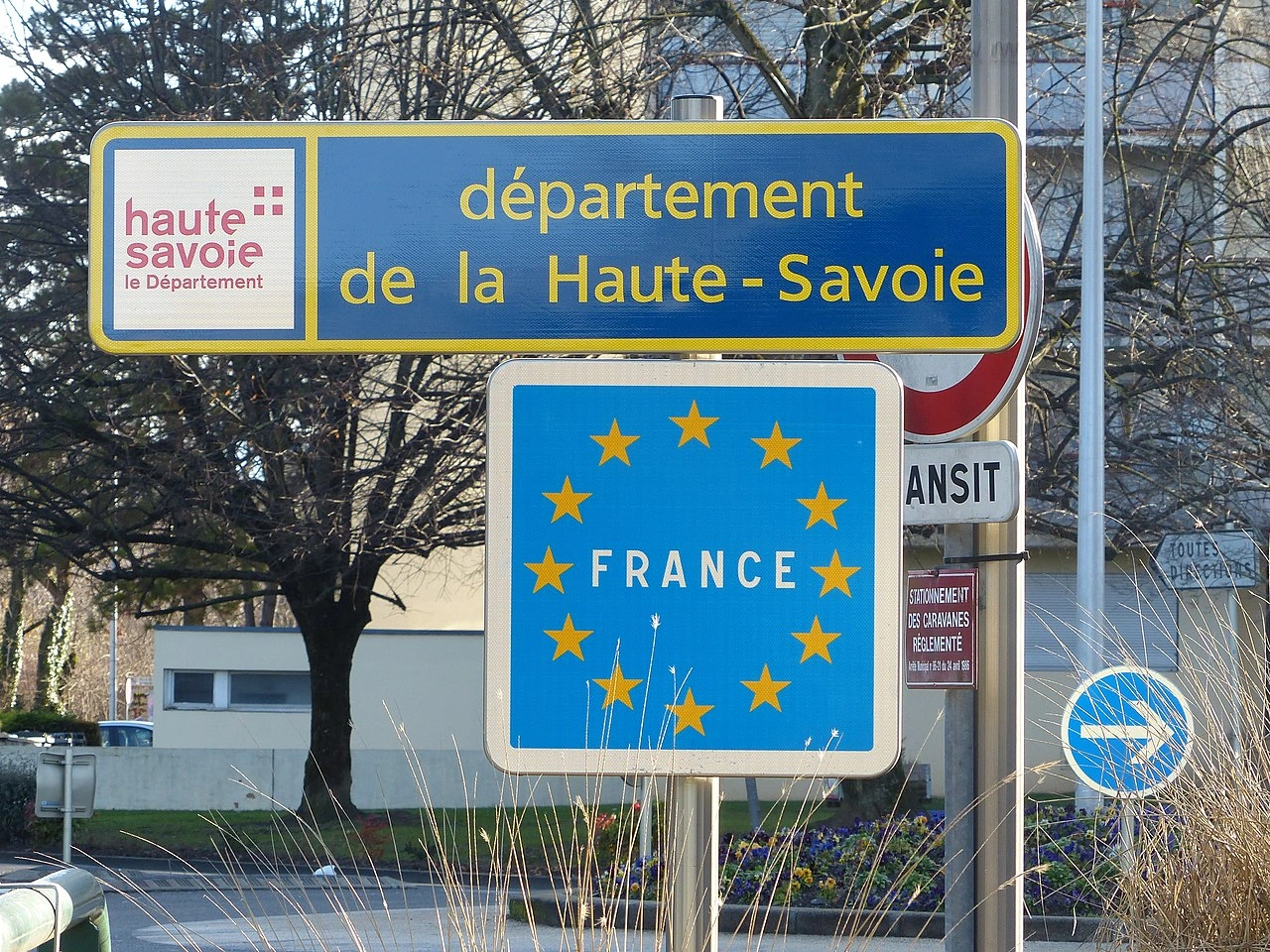
Frontera internacional
What is an international border?

An international border is the legal boundary between two countries.

How can you recognise an international border?

It may be identified by a country-name sign, national or regional symbols, flags, border posts, customs facilities or passport-control signs.

Does every international border have a road sign?

No. Borders may be marked differently, and some minor roads or open-border areas may have only a small identification sign or boundary marker.

Does a border sign require you to stop?

Not normally. Stop only when required by traffic lights, barriers, officers, customs signs, passport controls or another instruction.

When do the destination country’s traffic rules begin?

The new country’s traffic laws apply from the international boundary, not merely from the next town or major intersection.

Does the border sign itself impose the new rules?

No. The rules change because you have entered another country. The sign identifies that change of jurisdiction.

Can the driving side change at a border?

Yes. Where neighbouring countries use different driving sides, a specially designed road arrangement guides traffic safely from one side to the other.

Can speed limits change at the border?

Yes. The destination country may have different general limits for motorways, built-up areas, rural roads and particular vehicle categories.

Is the border sign a speed-limit sign?

No. Drivers must learn the destination country’s general limits and obey any regulatory signs displayed after crossing.

Can traffic-sign designs change?

Yes. Colours, symbols, shapes and road-marking conventions may differ, even when neighbouring countries follow similar international standards.

Can vehicle-equipment requirements change?

Yes. Requirements concerning safety vests, warning triangles, winter tyres, lights, toll equipment or environmental stickers may differ between countries.

Which documents may be required?

Depending on the journey, drivers may need a passport or identity card, driving licence, vehicle-registration document, insurance evidence, visa or customs documents.

Is a border check the same as customs control?

No. Border or immigration control concerns people and travel documents. Customs control principally concerns goods, cargo, money and applicable duties or restrictions.

Can immigration and customs controls occur together?

Yes. Both may operate at the same border facility even though they perform different legal functions.

Does every border have passport control?

No. Countries participating in an open-border area may normally cross internal borders without routine checks, although temporary controls may still be introduced.

Does every border have customs control?

No. Countries within a customs union may allow goods to move across their internal borders without ordinary customs duties or routine customs formalities.

Is an open border completely uncontrolled?

No. Police, customs and other authorities may still conduct lawful checks, enforce national rules and temporarily control the border where permitted.

May you cross the border anywhere?

Only where local law permits it. External or controlled borders may have to be crossed through an authorised border-crossing point during its operating hours.

Can a border crossing be temporarily closed?

Yes. Closures or restrictions may result from security measures, emergencies, severe weather, roadworks or administrative decisions.

Can certain vehicles be restricted?

Yes. A crossing may restrict heavy vehicles, dangerous goods, agricultural traffic, pedestrians or cyclists because of road design or border-control facilities.

May goods have to be declared?

Yes. Commercial goods, restricted products, goods exceeding personal allowances and certain amounts of cash may require declaration.

Do tolls or road charges change at the border?

They may. The destination country may use toll roads, vignettes, distance-based charges, low-emission zones or other payment systems.

Should you rely only on navigation software?

No. Navigation information may not include current border controls, vehicle restrictions or document requirements. Follow official signs and instructions.

What should you do before an international road journey?

Check the destination and transit countries’ traffic rules, required documents, insurance, vehicle equipment, tolls and border or customs requirements.

Do instructions from border officers override ordinary signs?

Yes. Follow lawful instructions from authorised border, police and customs officers, even when they temporarily differ from the normal traffic arrangement.

1 Francia 2 Autopista 3 Vía rápida 4 Zona residencial 5 Zona 6 Límite de velocidad 7 Velocidad mínima 8 Velocidad recomendada 9 Senda peatonal 10 Carril bici 11 Advertencia de peatones 12 Túnel 13 Puente 14 Calle ciclista 15 Zona peatonal 16 Resalto 17 Carretera de peaje 18 Aduana 19 Sentido único 20 Muelle 21 Pendiente 22 Carril bus 23 Parada de autobús 24 Calle sin salida 25 Señal de STOP 26 Ceda el paso 27 Glorieta 28 Vía con prioridad 29 Estrechamiento de calzada 30 Prioridad sobre el tráfico en sentido contrario 31 Ceda el paso al tráfico en sentido contrario 32 Paso de peatones 33 Paso a nivel 34 Dirección obligatoria 35 Prohibición de giro 36 Zona escolar 37 Adelantamiento 38 Cruce de animales 39 Calzada deslizante 40 Desprendimiento de rocas 41 Aeronaves 42 Curva 43 Panel direccional 44 Circulación en sentido contrario 45 Obras 46 Viento lateral 47 Límite de altura 48 Límite de anchura 49 Límite de longitud 50 Límite de peso 51 Señal de control de velocidad 52 Barreras selectivas 53 Zona de bajas emisiones 54 Prioridad en la próxima intersección 55 Semáforos 56 Advertencia de semáforos 57 Semáforos peatonales 58 Marcas viales 59 Esquema de intersección 60 Zona avanzada para bicicletas 61 Indicador de velocidad 62 Permiso de conducir 63 Marcador de ubicación 64 Número de carretera 65 Paneles de aproximación 66 Aseos públicos 67 Área de descanso 68 Espejo de tráfico 69 Teléfono de emergencia 70 Frontera internacional 71 Ruta ciclista 72 Fin de restricción 73 Estacionamiento 74 Prohibido estacionar 75 Prohibido parar 76 Estacionamiento en línea 77 Estacionamiento alterno 78 Parquímetro 79 Disco de estacionamiento 80 Estacionamiento para personas con discapacidad 81 Gestión del tráfico 82 Incorporación 83 Marcha atrás 84 Cambio de sentido 85 Viaje compartido 86 Atasco 87 Intersección sin regulación 88 Estado de la calzada 89 Circunvalación 90 Salida 91 Punto de información 92 Equitación 93 Permiso provisional 94 Mercancías peligrosas 95 Salida de emergencia 96 Rampa de frenado de emergencia 97 Servicio de radio 98 Carga sobredimensionada 99 Carril 100 Estación de inflado ...