AutobahnSchweiz

Lerne Verkehrsregeln mit klaren Erklärungen und visuellen Beispielen in unserem illustrierten Buch – einfach, verständlich und anschaulich.


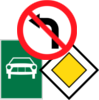
2. Autobahn

Eine Autobahn ist eine Straße, die speziell für den motorisierten Verkehr gebaut und entsprechend ausgeschildert ist. Autobahnen haben normalerweise getrennte Richtungsfahrbahnen, kontrollierte Zu- und Abfahrten, keine direkten Zufahrten zu angrenzenden Grundstücken und keine höhengleichen Kreuzungen mit anderen Straßen, Eisenbahnen oder Wegen.

Auf Autobahnen gelten besondere Verkehrsregeln. Welche Verkehrsteilnehmer zugelassen sind, welche Geschwindigkeitsbegrenzungen und Fahrstreifenregeln gelten sowie Maut- und Notfallvorschriften unterscheiden sich je nach Land. Fahrer müssen daher die örtlichen Verkehrszeichen und Vorschriften beachten.

Autobahn
How can you recognise a motorway?

A motorway is normally identified by a special motorway sign at its entrance. It commonly has separate carriageways, controlled entrances and exits, and no ordinary intersections or direct access to neighbouring properties.

Who may use a motorway?

Motorways are primarily intended for motor vehicles capable of travelling safely at motorway speeds. Pedestrians, cyclists, animals and certain slow vehicles are generally prohibited, but the exact access requirements differ between countries.

What is the speed limit on a motorway?

There is no universal motorway speed limit. The applicable limit depends on the country, road section, vehicle category and driving conditions. Posted or variable speed-limit signs may replace the general national limit.

How should you enter a motorway?

Use the entrance or acceleration lane to observe motorway traffic and adjust your speed where possible. Enter only when there is a safe gap and follow the local priority and merging rules.

How should you leave a motorway?

Move into the correct lane in good time and signal when required. Enter the exit or deceleration lane before reducing your speed, unless traffic, signs or road conditions require you to slow down earlier.

Which lane should you use on a motorway?

Follow the local keep-left or keep-right rule and any lane-direction signs. Lanes closer to the centre of the motorway are commonly used for overtaking, but lane-use rules differ between countries and vehicle categories.

Can you stop on a motorway?

Voluntary stopping and parking are normally permitted only in designated parking or service areas. Drivers may still have to stop because of congestion, an emergency or another unavoidable situation.

Can you reverse or make a U-turn on a motorway?

Reversing, making a U-turn and driving against the direction of traffic are generally prohibited. If you miss an exit, continue to the next suitable exit.

What should you do if your vehicle breaks down?

Move the vehicle out of the traffic lanes when this can be done safely, activate the hazard warning lights and follow the local breakdown procedures. Leave the vehicle safely, keep away from moving traffic and use a warning triangle or safety vest where required by local law.

What is the difference between a motorway and an expressway?

A motorway normally has the highest level of access control and is governed by specific motorway rules. An expressway may have similar characteristics but may permit different road users or contain lower-standard junctions. The legal distinction varies between countries.

1 Schweiz 2 Autobahn 3 Schnellstraße 4 Wohngebiet 5 Zone 6 Geschwindigkeitsbegrenzung 7 Mindestgeschwindigkeit 8 Gehweg 9 Radweg 10 Gemeinsamer Geh- und Radweg 11 Tunnel 12 Fußgängerzone 13 Zoll 14 Einbahnverkehr 15 Steigung oder Gefälle 16 Busspur 17 Bushaltestelle 18 Sackgasse 19 Stoppschild 20 Vorfahrt gewähren 21 Kreisverkehr 22 Vorfahrtstraße 23 Fahrbahnverengung 24 Vorrang vor dem Gegenverkehr 25 Gegenverkehr Vorrang gewähren 26 Fußgängerüberweg 27 Bahnübergang 28 Vorgeschriebene Fahrtrichtung 29 Abbiegeverbot 30 Schulbereich 31 Überholen 32 Wild- oder Viehwechsel 33 Rutschige Fahrbahn 34 Steinschlag 35 Flugzeuge 36 Kurve 37 Richtungstafel 38 Falschfahrt 39 Straßenarbeiten 40 Seitenwind 41 Höhenbegrenzung 42 Breitenbegrenzung 43 Längenbegrenzung 44 Gewichtsbeschränkung 45 Wegweiser an einer Kreuzung 46 Vorfahrt an der nächsten Kreuzung 47 Ampeln 48 Warnung vor Ampeln 49 Fußgängerampeln 50 Fahrbahnmarkierungen 51 Kreuzungsverlauf 52 Führerschein 53 Kilometrierungsmarkierung 54 Straßennummer 55 Entfernungstafeln 56 Verkehrsspiegel 57 Notruftelefon 58 Staatsgrenze 59 Fußgängerunterführung 60 Radroute 61 Aufhebung einer Beschränkung 62 Parken 63 Parkverbot 64 Halteverbot 65 Parkscheibe 66 Rückwärtsfahren 67 Wenden 68 Stau 69 Umleitung 70 Ungeregelte Kreuzung 71 Fahrbahnschäden 72 Ausfahrt 73 Informationsstelle 74 Reiten 75 Notausgang 76 Notfall-Auslaufspur 77 Verkehrsfunk 78 Überbreite oder übergroße Ladung 79 Ortsgrenze 80 Krankenhaus 81 Parkhaus 82 Ausweichstelle 83 Fußgängerbrücke 84 Achslastbegrenzung 85 Kennzeichen 86 Ladestation 87 Allgemeine Gefahr 88 Wetter 89 Abbiegen bei Rot 90 Fußgänger 91 Radfahrer 92 Moped 93 Motorrad 94 Pkw 95 Lkw 96 Bus 97 Polizei 98 Krankenwagen 99 Zu dichtes Auffahren 100 Europäische Abgasnorm ...