StaatsgrenzeSchweiz

Lerne Verkehrsregeln mit klaren Erklärungen und visuellen Beispielen in unserem illustrierten Buch – einfach, verständlich und anschaulich.


58. Staatsgrenze

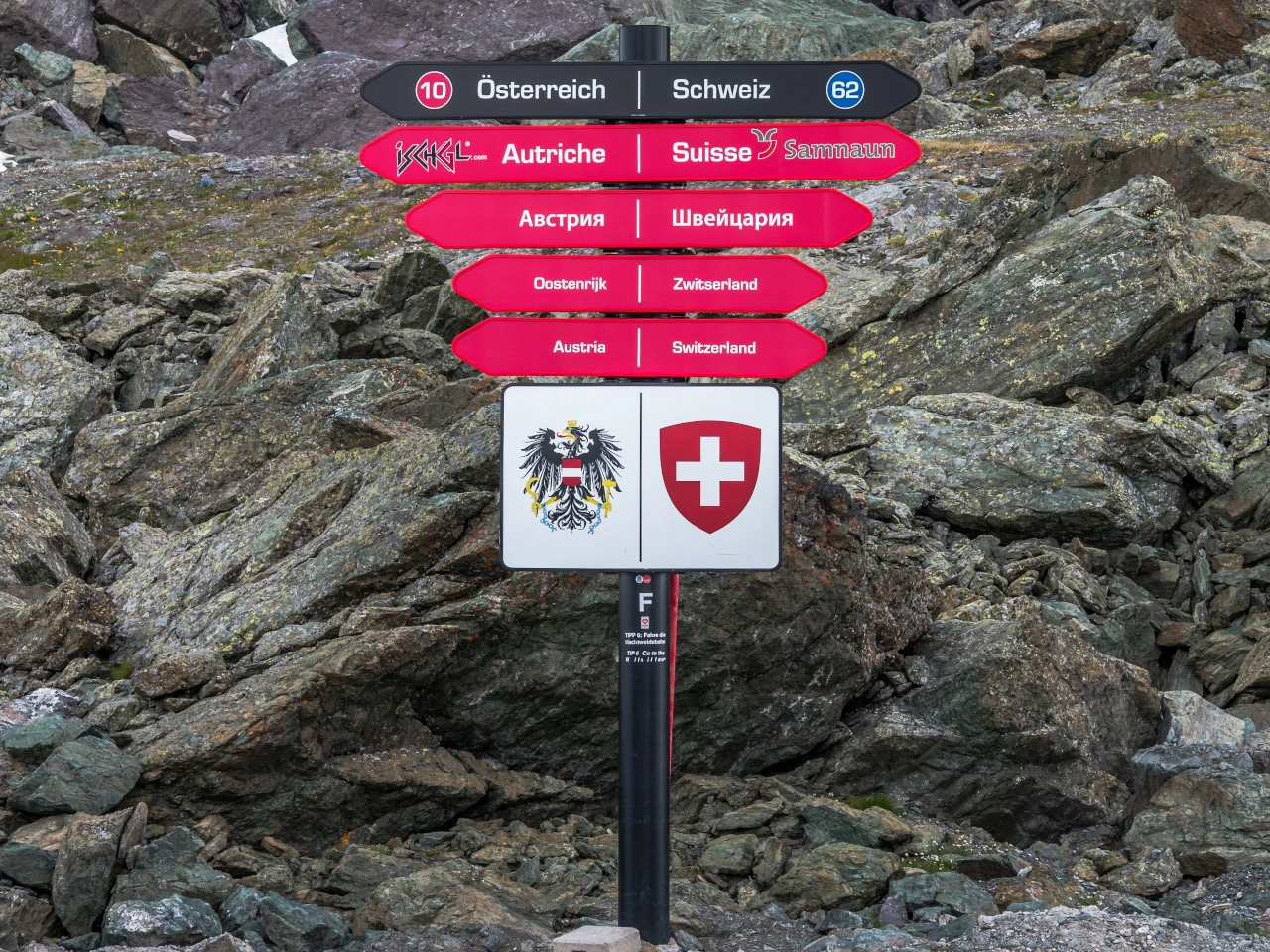
Eine Staatsgrenze ist die rechtliche Grenze zwischen zwei Ländern. Ein Grenzschild kann das Land anzeigen, in das man einfährt, und daran erinnern, dass andere Verkehrsregeln, Geschwindigkeitsbegrenzungen, Verkehrszeichen, Fahrzeuganforderungen und Dokumentvorschriften gelten können.

Das Grenzschild selbst verpflichtet normalerweise nicht zum Anhalten. Pass-, Einreise- oder Zollkontrollen können an einer Kontrollstelle stattfinden; manche internationale Grenzen können aufgrund regionaler Abkommen jedoch ohne routinemäßige Kontrollen überquert werden.
Staatsgrenze
What is an international border?

An international border is the legal boundary between two countries.

How can you recognise an international border?

It may be identified by a country-name sign, national or regional symbols, flags, border posts, customs facilities or passport-control signs.

Does every international border have a road sign?

No. Borders may be marked differently, and some minor roads or open-border areas may have only a small identification sign or boundary marker.

Does a border sign require you to stop?

Not normally. Stop only when required by traffic lights, barriers, officers, customs signs, passport controls or another instruction.

When do the destination country’s traffic rules begin?

The new country’s traffic laws apply from the international boundary, not merely from the next town or major intersection.

Does the border sign itself impose the new rules?

No. The rules change because you have entered another country. The sign identifies that change of jurisdiction.

Can the driving side change at a border?

Yes. Where neighbouring countries use different driving sides, a specially designed road arrangement guides traffic safely from one side to the other.

Can speed limits change at the border?

Yes. The destination country may have different general limits for motorways, built-up areas, rural roads and particular vehicle categories.

Is the border sign a speed-limit sign?

No. Drivers must learn the destination country’s general limits and obey any regulatory signs displayed after crossing.

Can traffic-sign designs change?

Yes. Colours, symbols, shapes and road-marking conventions may differ, even when neighbouring countries follow similar international standards.

Can vehicle-equipment requirements change?

Yes. Requirements concerning safety vests, warning triangles, winter tyres, lights, toll equipment or environmental stickers may differ between countries.

Which documents may be required?

Depending on the journey, drivers may need a passport or identity card, driving licence, vehicle-registration document, insurance evidence, visa or customs documents.

Is a border check the same as customs control?

No. Border or immigration control concerns people and travel documents. Customs control principally concerns goods, cargo, money and applicable duties or restrictions.

Can immigration and customs controls occur together?

Yes. Both may operate at the same border facility even though they perform different legal functions.

Does every border have passport control?

No. Countries participating in an open-border area may normally cross internal borders without routine checks, although temporary controls may still be introduced.

Does every border have customs control?

No. Countries within a customs union may allow goods to move across their internal borders without ordinary customs duties or routine customs formalities.

Is an open border completely uncontrolled?

No. Police, customs and other authorities may still conduct lawful checks, enforce national rules and temporarily control the border where permitted.

May you cross the border anywhere?

Only where local law permits it. External or controlled borders may have to be crossed through an authorised border-crossing point during its operating hours.

Can a border crossing be temporarily closed?

Yes. Closures or restrictions may result from security measures, emergencies, severe weather, roadworks or administrative decisions.

Can certain vehicles be restricted?

Yes. A crossing may restrict heavy vehicles, dangerous goods, agricultural traffic, pedestrians or cyclists because of road design or border-control facilities.

May goods have to be declared?

Yes. Commercial goods, restricted products, goods exceeding personal allowances and certain amounts of cash may require declaration.

Do tolls or road charges change at the border?

They may. The destination country may use toll roads, vignettes, distance-based charges, low-emission zones or other payment systems.

Should you rely only on navigation software?

No. Navigation information may not include current border controls, vehicle restrictions or document requirements. Follow official signs and instructions.

What should you do before an international road journey?

Check the destination and transit countries’ traffic rules, required documents, insurance, vehicle equipment, tolls and border or customs requirements.

Do instructions from border officers override ordinary signs?

Yes. Follow lawful instructions from authorised border, police and customs officers, even when they temporarily differ from the normal traffic arrangement.

1 Schweiz 2 Autobahn 3 Schnellstraße 4 Wohngebiet 5 Zone 6 Geschwindigkeitsbegrenzung 7 Mindestgeschwindigkeit 8 Gehweg 9 Radweg 10 Gemeinsamer Geh- und Radweg 11 Tunnel 12 Fußgängerzone 13 Zoll 14 Einbahnverkehr 15 Steigung oder Gefälle 16 Busspur 17 Bushaltestelle 18 Sackgasse 19 Stoppschild 20 Vorfahrt gewähren 21 Kreisverkehr 22 Vorfahrtstraße 23 Fahrbahnverengung 24 Vorrang vor dem Gegenverkehr 25 Gegenverkehr Vorrang gewähren 26 Fußgängerüberweg 27 Bahnübergang 28 Vorgeschriebene Fahrtrichtung 29 Abbiegeverbot 30 Schulbereich 31 Überholen 32 Wild- oder Viehwechsel 33 Rutschige Fahrbahn 34 Steinschlag 35 Flugzeuge 36 Kurve 37 Richtungstafel 38 Falschfahrt 39 Straßenarbeiten 40 Seitenwind 41 Höhenbegrenzung 42 Breitenbegrenzung 43 Längenbegrenzung 44 Gewichtsbeschränkung 45 Wegweiser an einer Kreuzung 46 Vorfahrt an der nächsten Kreuzung 47 Ampeln 48 Warnung vor Ampeln 49 Fußgängerampeln 50 Fahrbahnmarkierungen 51 Kreuzungsverlauf 52 Führerschein 53 Kilometrierungsmarkierung 54 Straßennummer 55 Entfernungstafeln 56 Verkehrsspiegel 57 Notruftelefon 58 Staatsgrenze 59 Fußgängerunterführung 60 Radroute 61 Aufhebung einer Beschränkung 62 Parken 63 Parkverbot 64 Halteverbot 65 Parkscheibe 66 Rückwärtsfahren 67 Wenden 68 Stau 69 Umleitung 70 Ungeregelte Kreuzung 71 Fahrbahnschäden 72 Ausfahrt 73 Informationsstelle 74 Reiten 75 Notausgang 76 Notfall-Auslaufspur 77 Verkehrsfunk 78 Überbreite oder übergroße Ladung 79 Ortsgrenze 80 Krankenhaus 81 Parkhaus 82 Ausweichstelle 83 Fußgängerbrücke 84 Achslastbegrenzung 85 Kennzeichen 86 Ladestation 87 Allgemeine Gefahr 88 Wetter 89 Abbiegen bei Rot 90 Fußgänger 91 Radfahrer 92 Moped 93 Motorrad 94 Pkw 95 Lkw 96 Bus 97 Polizei 98 Krankenwagen 99 Zu dichtes Auffahren 100 Europäische Abgasnorm ...