


PolandPoland
 Traffic rules
 Poland
1. Poland
Poland is a country in Central Europe, bordered by Germany, Czechia, Slovakia, Ukraine, Belarus, Lithuania and Russia. Traffic drives on the right, and the country has a growing network of motorways and expressways connecting its major cities and neighbouring countries. Poland is notable for its relatively high 140 km/h motorway speed limit. Passenger cars do not need a national motorway vignette, although tolls still apply on some concession-operated motorway sections. Drivers must also use dipped headlights or daytime running lights throughout the year.
Polish is the official language and is the main language used on road and destination signs. It uses the Latin alphabet with distinctive letters such as ą, ć, ę, ł, ń, ó, ś, ź and ż. In some municipalities, drivers can also encounter bilingual place-name signs using recognised minority or regional languages, including German, Kashubian, Lithuanian, Belarusian and Lemko. Winter tyres are recommended in cold conditions but are not subject to a general seasonal requirement, while snow chains may be required on particular snow-covered roads.
AI-generated by Traffic-rules.com • WCIT • CC BY-SA
Which number can you call in an emergency in Poland?
Call 112 for urgent emergency assistance. Give the operator your location and explain what happened.
🔗 gov.pl • Polish Government, how to report an emergency to 112
What is the legal alcohol limit for drivers in Poland?
Drivers must keep their blood-alcohol concentration below 0.2‰ (0.2 g/l). Poland therefore has a very low alcohol limit, and the safest approach is not to drink any alcohol before driving.
🔗 europa.eu • Your Europe / national authorities, Poland road rules, Alcohol limits
What speed limits apply to passenger cars in Poland?
Built-up areas: The general maximum speed is 50 km/h, both during the day and at night, unless signs indicate another limit.
Outside built-up areas: For passenger cars, the general maximum speed on an ordinary single-carriageway road outside built-up areas is 90 km/h, unless signs indicate another limit.
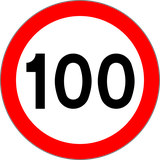
Expressways: For passenger cars, the maximum speed is generally 100 km/h on a single-carriageway expressway and 120 km/h on a dual-carriageway expressway, unless signs indicate a lower limit. A non-expressway dual carriageway with at least two lanes in each direction generally has a 100 km/h limit.
Motorways: For passenger cars, the general maximum speed on a motorway is 140 km/h, unless signs indicate a lower limit.
🔗 europa.eu • Your Europe / national authorities, Poland road rules, Speed limits for passenger cars
What are the seat-belt and child-restraint rules in Poland?
Seat belts must be worn by drivers and passengers in vehicles equipped with them, subject to specific legal exemptions.
Children shorter than 150 cm must normally use a suitable approved child restraint. A rear-seat belt may be used for a child at least 135 cm tall only when the child’s height and weight make it impossible to provide an appropriate restraint.
A third child aged 3 or older may use a rear-seat belt when two installed child restraints leave no room for a third. These rear-seat exceptions do not permit a child shorter than 150 cm to use only a belt in front. A rear-facing seat must not face an active frontal airbag; separate taxi and medical exemptions apply.
🔗 europa.eu • Your Europe / national authorities, Poland road rules, Seat belts and child restraints; 🔗 ketrzyn.policja.gov.pl • Polish Police, child-restraint rules and rear-seat exceptions; 🔗 nidzica.policja.gov.pl • Polish Police, child seats and exempt transport
Can you use a handheld mobile phone while driving in Poland?
No. Drivers may not use a phone while driving if doing so requires holding the handset or microphone in the hand. Hands-free use is permitted.
🔗 europa.eu • Your Europe / national authorities, Poland road rules, Mobile telephone
What safety equipment must you carry in a car in Poland?
A passenger car must carry a warning triangle and fire extinguisher. A first-aid kit and reflective safety vest are strongly recommended but are not part of the general mandatory equipment requirement for an ordinary private car.
Must cars use lights during the day in Poland?
Yes. Drivers must use dipped headlights while driving throughout the year. From dawn to dusk in normal visibility, daytime running lights may be used instead.
🔗 europa.eu • Your Europe / national authorities, Poland road rules, Other specific rules, lights
Can a visitor use a driving licence issued in another EU country in Poland?
Yes. A valid, full EU driving licence is recognised for the vehicle categories it covers. You must meet the applicable minimum age. A learner licence or a temporary replacement certificate does not have the same automatic recognition.
Are motorcycle helmets compulsory in Poland?
Yes. On an ordinary, open motorcycle, both the rider and passenger must wear a protective helmet. Use a helmet that meets the applicable approval requirements and fasten it correctly. Check the specific rules before relying on an exemption for an enclosed or specially equipped vehicle.
🔗 europa.eu • Your Europe / national authorities, Poland road rules

