

Book
 Traffic rules
1. Seatbelt
A seatbelt is a safety device in vehicles designed to secure the occupant in their seat and reduce injury during sudden stops, collisions, or crashes. In short: Seatbelts save lives. They’re one of the simplest and most effective safety features in any vehicle.
- Keeps you restrained and prevents being thrown forward or ejected from the vehicle.
- Distributes crash forces across strong parts of the body (like the chest, hips, and shoulders).
- Works with other safety systems like airbags to reduce injury.
- Wearing a seatbelt is legally required in most countries.
- Not wearing one greatly increases the risk of death or serious injury in a crash.
- Even in the back seat, seatbelts are just as important.
- How to Wear a Seatbelt Properly:
- Shoulder strap across the chest and shoulder, not the neck.
- Lap belt low and snug across the hips, not the stomach.
- Remove slack and make sure it's not twisted.
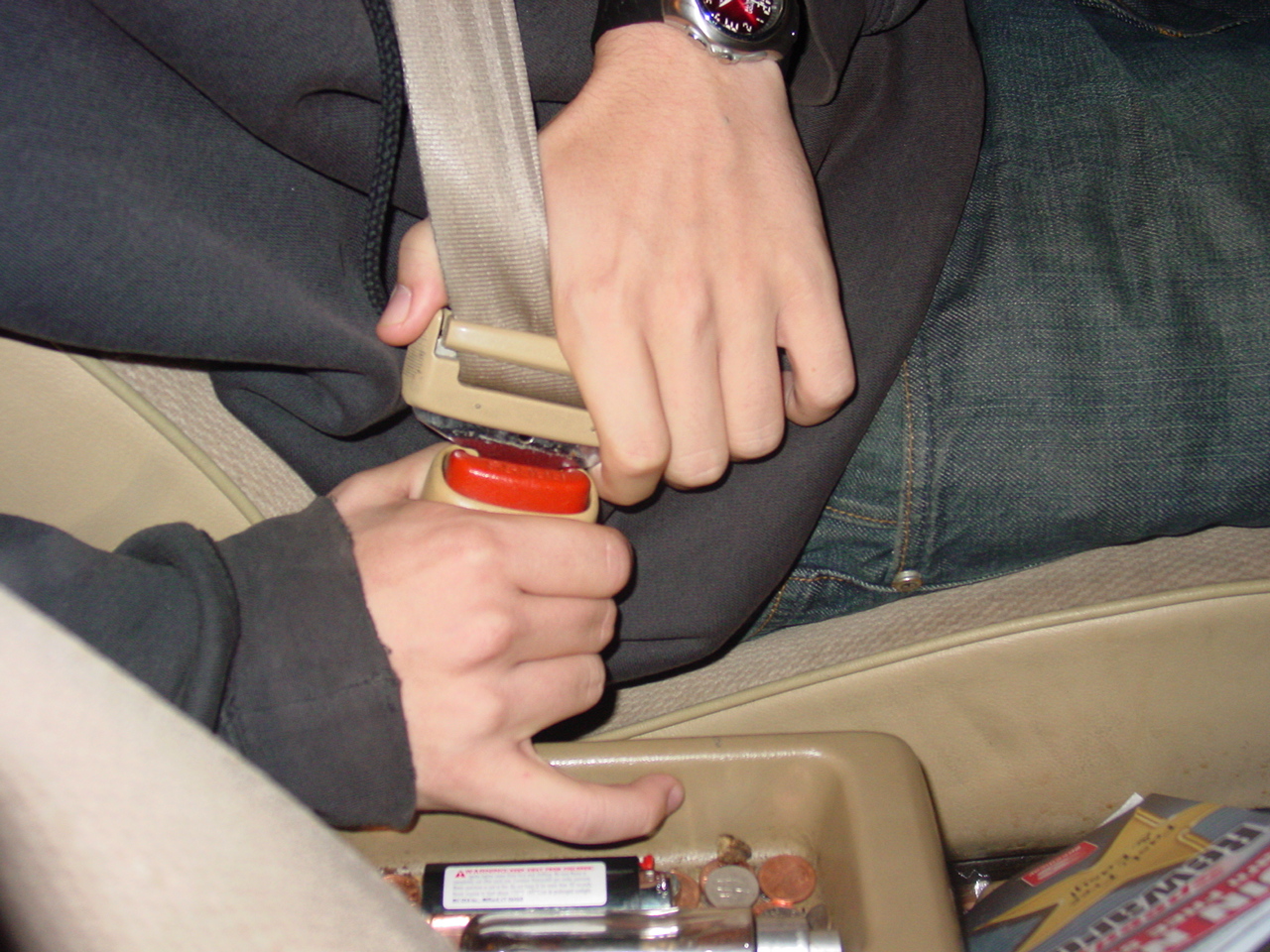
© Wikimedia.org/Jusmar, CC0

