

Book
 Traffic rules
1. Tire pressure
Tire pressure refers to the amount of air inside a tire, measured in PSI (pounds per square inch) or kPa (kilopascals). It’s a key factor in your vehicle’s safety, performance, and fuel efficiency. Correct pressure ensures: proper traction and handling, even tire wear, better fuel economy and shorter braking distances. Incorrect pressure can lead to: poor grip, increased tire wear, blowouts or tire failure and reduced control, especially in wet or icy conditions. In short: Tire pressure is a small detail with big safety and performance impacts. Checking it regularly keeps your car running smoothly and safely.
- Recommended Tire Pressure:
- Found in your vehicle’s manual or on a sticker inside the driver’s door frame.
- Common passenger car pressure: 30–35 PSI (2.0–2.4 bar).
- Do not use the number on the tire itself—that's the maximum, not the recommended value.
- How to Check Tire Pressure:
- Use a tire pressure gauge (digital or analog).
- Check when tires are cold (before driving or after sitting for a few hours).
- Compare the reading to your vehicle's recommended pressure.
- Inflate or deflate as needed.
- Modern cars have a Tire Pressure Monitoring System (TPMS) that alerts you if the pressure drops too low.
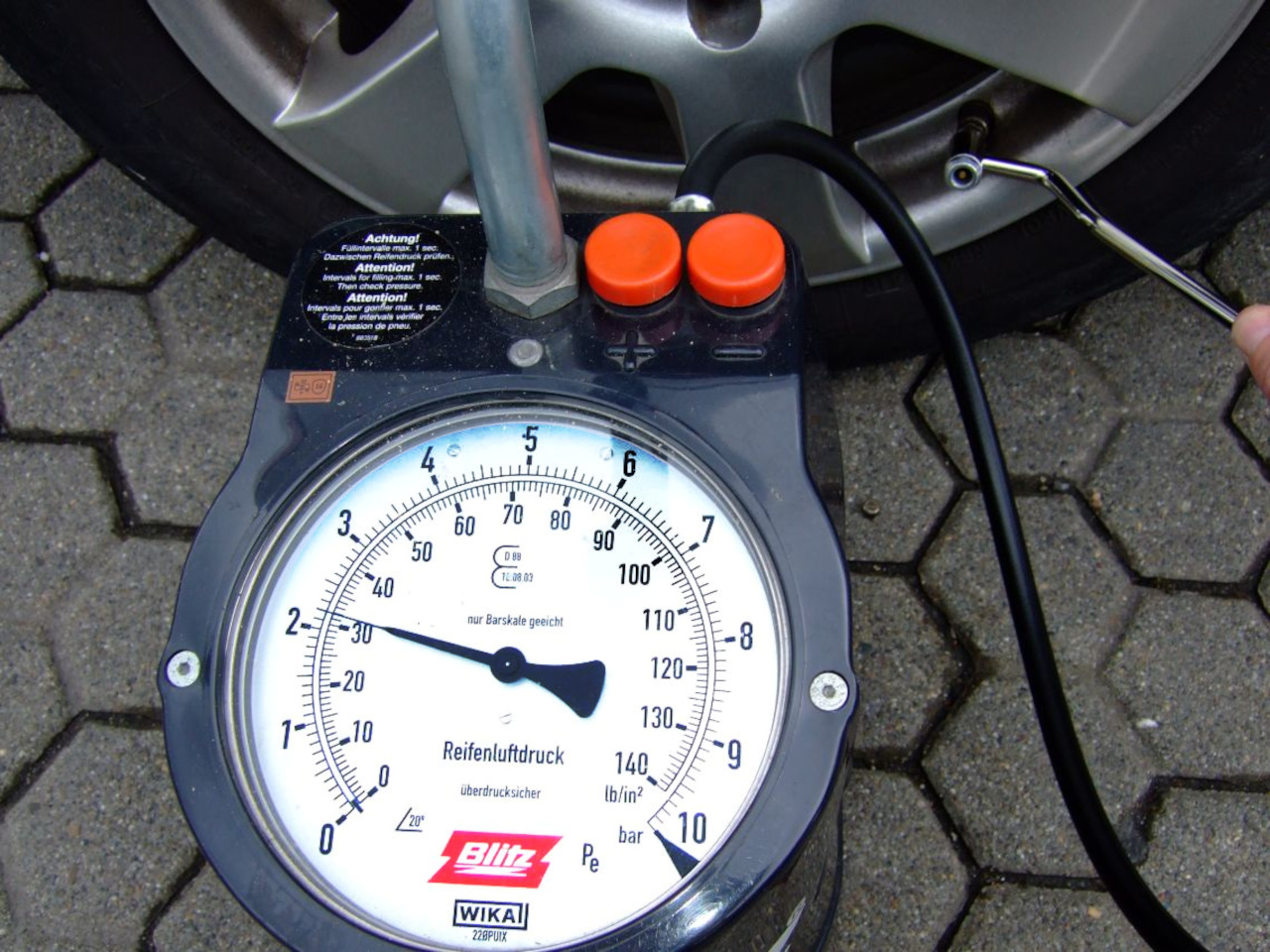
© Wikimedia.org/JEG14, CC0

