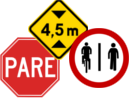
A traffic sign is a standardized visual symbol placed along roads to guide, warn, or regulate drivers, cyclists, and pedestrians. These signs provide essential information about road conditions, rules, directions, and potential hazards, helping to ensure safety and smooth traffic flow. They come in various shapes and colors—such as triangular warning signs, circular prohibitory or mandatory signs, and rectangular information signs—each designed for quick recognition and clear understanding.






A priority sign is a traffic sign that indicates the order in which vehicles shall pass intersection points. Vehicles often come into conflict with other vehicles and pedestrians because their intended courses of travel intersect, and thus interfere with each other's routes. The general principle that establishes who has the right to go first is called 'right of way' or 'priority'. It establishes who has the right to use the conflicting part of the road and who has to wait until the other does so. The vehicle that does not need to wait is said to 'have the right of way' or to 'have priority.'
Warning for an uncontrolled crossroad.
Give way to all drivers.

Warning for an uncontrolled crossroad with a road from the right.

Warning for an uncontrolled crossroad with a sharp road from the right.
Warning for a roundabout.
Stop and give way to all drivers.
Stop and give way ahead.
Mandatory direction of the roundabout.
A warning sign is a traffic sign that alerts drivers to a potential danger or change in road conditions ahead, giving them enough time to slow down and react safely. These signs warn about hazards such as sharp bends, pedestrian crossings, slippery surfaces, merging traffic, animals on the road, or upcoming intersections. Their purpose is not to forbid or command anything, but simply to prepare drivers for situations that require extra attention.
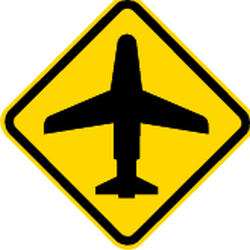
Warning for low-flying aircrafts.
Warning for cattle on the road.
Warning for crossing deer.
Warning for a movable bridge.
Warning for a speed bump.
Warning for a bad road surface.
Warning for children.
Warning for an uncontrolled crossroad.
Give way to all drivers.
Warning for an uncontrolled crossroad with a road from the right.
Warning for an uncontrolled crossroad with a sharp road from the right.
Warning for a roundabout.
Stop and give way to all drivers.
Stop and give way ahead.
Warning for a curve to the right.
Warning for a double curve, first right then left.

Warning for a sharp curve to the right.

Warning for curves.
Warning for cyclists.
Warning for a dip in the road.
Warning for falling rocks.
Warning for a limited height.
Warning for loose chippings on the road surface.
Warning for a narrowing.
Warning for pedestrians.
Warning for a crossing for pedestrians.

Warning for a playground.

Warning for a divided road.

Warning for the end of a divided road.
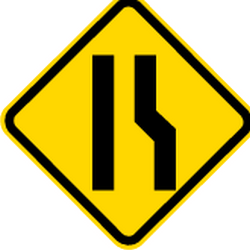
Warning for a road narrowing.
Warning for a road narrowing on the right.

Warning for an obstacle, pass either side.

Warning for an unpaved road surface.
Warning for roadworks.
Warning for a slippery road surface.
Warning for a steep ascent.
Warning for tractors.
Warning for a traffic light.
Warning for a railroad crossing without barriers.
Warning for a railroad crossing with barriers.
Warning for a railroad crossing with 1 railway.
Warning for a railroad crossing with more than 1 railway.
Warning for trams.
Warning for a road with two-way traffic.
Warning for a limited weight.
Warning for a limited width.
A prohibitory sign is a traffic sign that tells drivers what is not allowed on that specific road or in that situation. These signs impose restrictions such as no entry, no overtaking, no parking, speed limits, or bans on certain types of vehicles. Their purpose is to clearly indicate actions that are forbidden to ensure safety, maintain traffic flow, and protect vulnerable road users.
Buses prohibited.
Cars prohibited.
Cyclists prohibited.
Motorcycles prohibited.
Pedestrians prohibited.
Tractors prohibited.
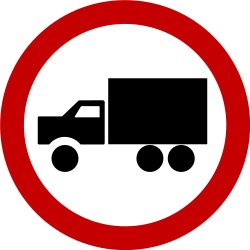
Trucks prohibited.
Overtaking prohibited.
End of the overtaking prohibition.
Begin of a speed limit.
Turning left prohibited.
Turning right prohibited.
Turning around prohibited (U-turn).
Driving straight ahead prohibited.
Vehicles higher than indicated prohibited.
Vehicles longer than indicated prohibited.
Vehicles heavier than indicated prohibited.
Vehicles with an axle weight heavier than indicated prohibited.
Vehicles wider than indicated prohibited.
Entry prohibited (checkpoint).
Parking prohibited.
Parking and stopping prohibited.
A mandatory sign is a traffic sign that tells drivers what they must do. Instead of prohibiting actions, these signs impose obligations such as following a specific direction, using a particular lane, or keeping a minimum speed. Their purpose is to guide traffic safely and efficiently by ensuring that all road users follow the same required behavior in places where it is necessary for order and safety.
Turning left mandatory.
Turning right mandatory.
Passing right mandatory.
Mandatory direction of the roundabout.
Driving straight ahead or turning left mandatory.
Driving straight ahead or turning right mandatory.
Mandatory right.
Driving straight ahead mandatory.
Road with two-way traffic.
Mandatory lane for buses.
Mandatory path for cyclists.
Mandatory divided path for pedestrians and cyclists.
Mandatory lane for trucks.
Mandatory parking spot.
An information sign is a traffic sign that provides useful guidance or clarification to road users without imposing rules or warnings. These signs inform drivers about things like parking zones, directions, facilities, road layouts, or the start and end of built-up areas. Their purpose is to help drivers navigate confidently by giving clear, practical information that improves orientation, comfort, and overall traffic flow.
Crossing for pedestrians.
Information about the destination of the ramp.
This traffic sign indicates a warning for low-flying aircrafts. It alerts road users that aircraft may fly low over the road, potentially causing noise distraction or sudden overflight surprises. Drivers should remain focused despite potential noise or shadow distractions. Typical Locations: airports, military airbases, landing strips, airshows or heliports.
© via Wikimedia.org
This traffic sign indicates a warning for cattle. It alerts drivers to the possible presence of cows, bulls, or other domestic livestock on or near the road. It helps prevent accidents, especially in rural or agricultural areas. Cattle may cross or walk along the road, either freely or under the supervision of a herder. Drivers should: slow down, be ready to stop suddenly, avoid honking or sudden movements. Typical Locations: farmlands, pastures near roads, unfenced grazing areas, mountain roads.
© via Wikimedia.org
This traffic sign indicates a warning for crossing deer. It alerts drivers to the potential presence of deer or other wild animals crossing the road. It is essential in areas where wildlife-vehicle collisions are common. Wild deer may suddenly cross the road, especially at dawn or dusk. Drivers should: reduce speed, stay alert, watch both sides of the road. Typical Locations: forests, national parks, wildlife corridors or countryside highways.
© via Wikimedia.org
This traffic sign indicates a warning for a movable bridge. It alerts that a movable (opening) bridge is ahead — such as a drawbridge or swing bridge — which may open for boat traffic. Drivers should be prepared to stop when the bridge is open and to expect possible traffic delays. It often accompanies barriers, lights, or warning bells at the actual site. Common near: rivers, canals, or ports.
© via Wikimedia.org
This traffic sign indicates a warning for a speed bump. It alerts drivers of an upcoming raised bump in the road designed to slow down traffic. Drivers should reduce speed to avoid discomfort, damage to the vehicle, or loss of control when driving over the bump. Typical Locations: residential areas, school zones, hospitals, pedestrian zones, roads with traffic calming measures.
© via Wikimedia.org
This traffic sign indicates a warning for a bad road surface. It alerts drivers to poor or uneven road conditions ahead. Drivers should slow down and be cautious of potholes, loose gravel, or irregular pavement. Common in: rural roads, construction zones, or temporarily damaged surfaces.
© via Wikimedia.org
This traffic sign indicates a warning for children. It alerts drivers that children may be present or crossing the road. Drivers should reduce speed and watch for children playing, walking, or going to/from school. Be especially alert for children suddenly crossing the road. Typical Locations: school zones, playgrounds, residential areas, bus stops or near pedestrian crossings.
© via Wikimedia.org
This traffic sign indicates a warning for an uncontrolled crossroad. It alerts drivers that a crossroad without traffic signals or priority signs is ahead. Drivers should slow down and be alert for traffic from side roads that may not stop. Yield according to local right-of-way rules (e.g., in many European countries, give way to the right). Typical Locations: Rural areas and roads where no clear priority is assigned.
© via Wikimedia.org
This traffic sign indicates you have to give way. It alerts drivers to yield the right of way to other road users. Drivers must slow down and yield to traffic on the intersecting road. Stop if necessary and proceed only when the way is clear. Common at: minor roads joining major roads, roundabouts and merging lanes.
© via Wikimedia.org
This traffic sign indicates a warning for a roundabout. It alerts that a roundabout (traffic circle) is ahead. Drivers should slow down and prepare to yield to traffic already in the roundabout.
© via Wikimedia.org

 Traffic rules
 Priority signs
 Warning signs
 Prohibitory signs
 Mandatory signs
 Information signs