

Book
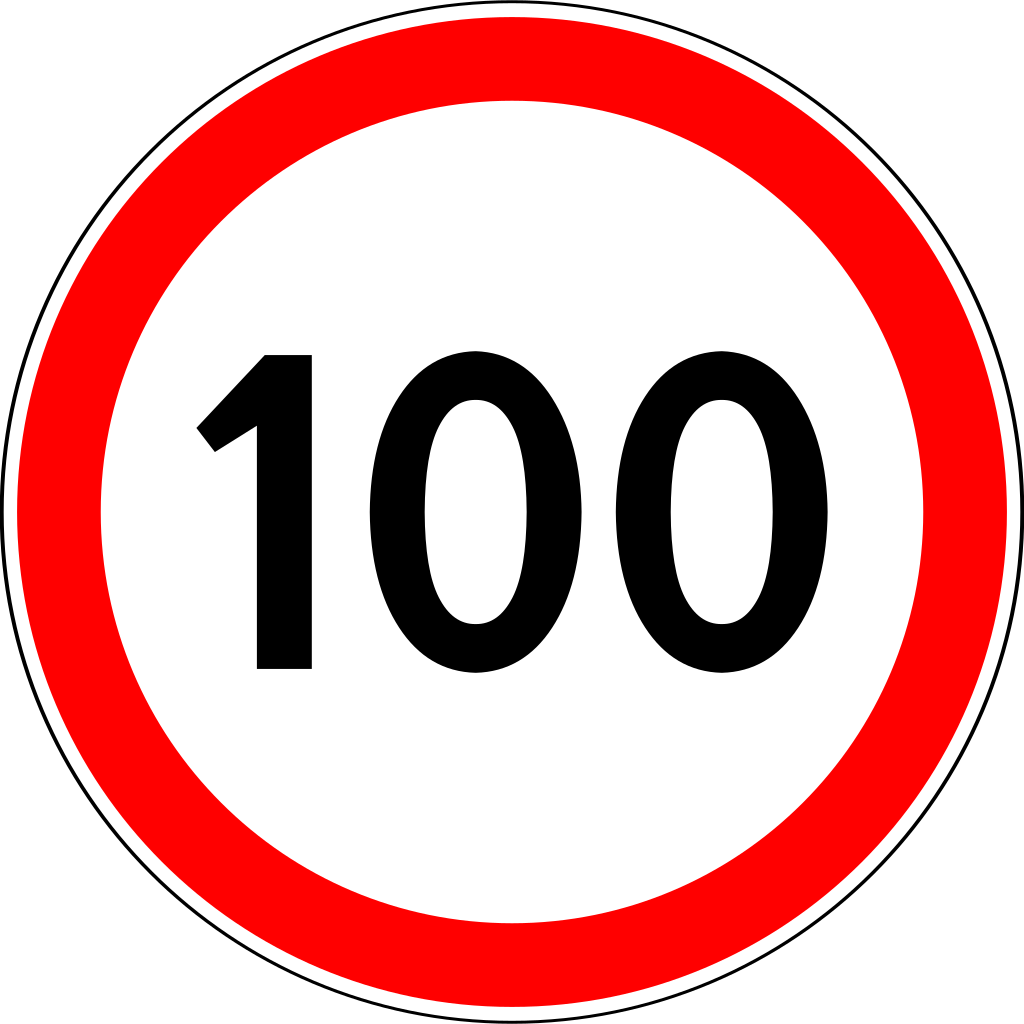 Traffic rules
1. National speed
National speed limits are the default maximum speeds set by law for different types of roads when no specific speed limit signs are present. They vary depending on the road type, vehicle category, and country, and drivers must know and apply them automatically.
- Speed must always be adapted to conditions (weather, traffic, visibility).
- Lower limits may apply for specific vehicles (e.g. trucks).
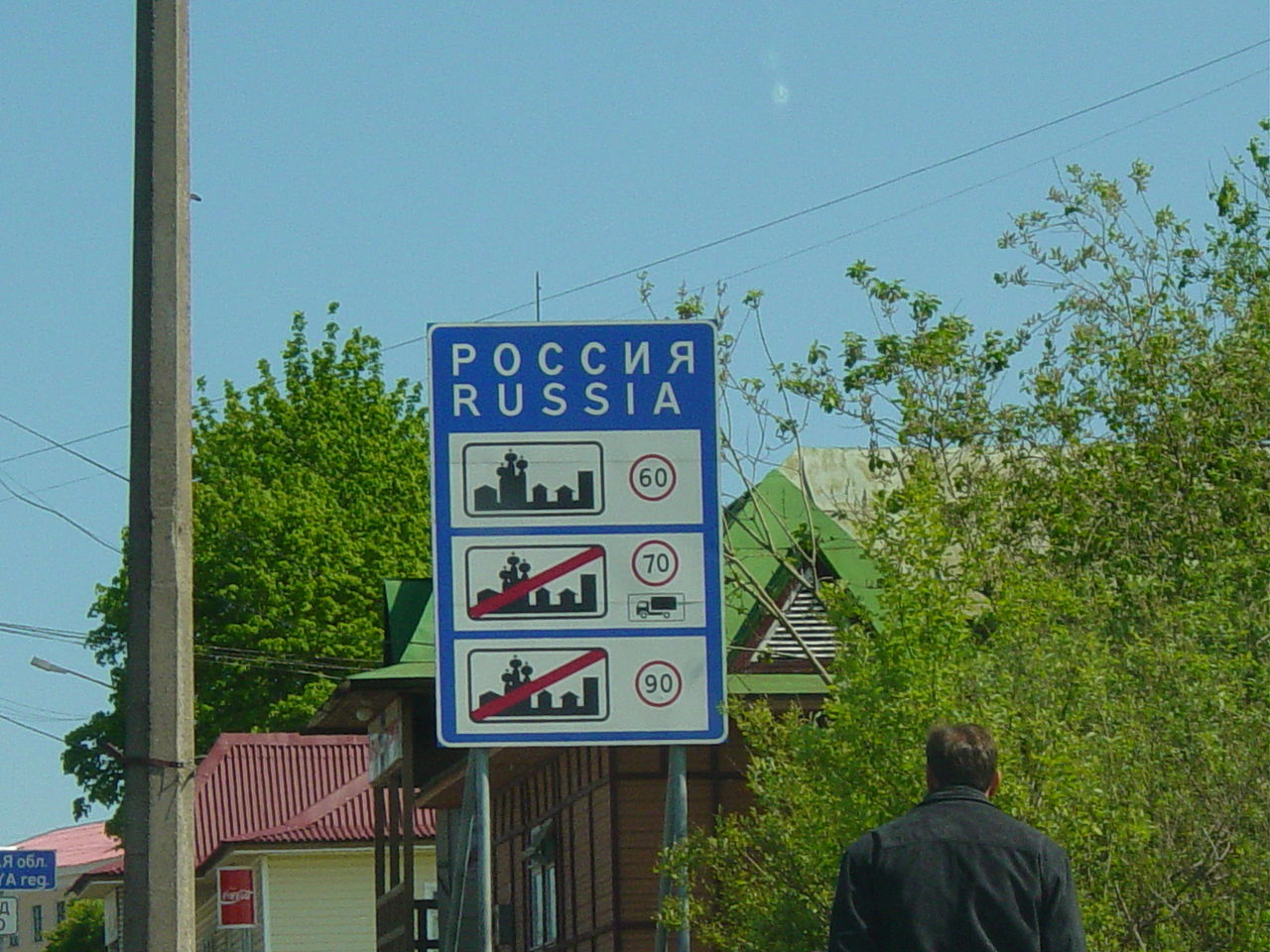
A sign indicating the general speed limits of Russia. © Wikimedia.org/Klaver71, CC0

2. Motorway
A motorway is a high-speed road designed for long-distance travel, with controlled access and no intersections or pedestrian traffic.
- High speed limits (often 100–130 km/h or 60–80 mph).
- Multiple lanes in each direction.
- No traffic lights or stop signs.
- No pedestrians, bicycles, or slow vehicles allowed.
- Entry and exit only through on-ramps and off-ramps.
- Often separated by a barrier or median.
- Different Names in Different Places:
- Motorway – UK, Ireland, parts of Europe.
- Freeway – USA (West Coast), Australia.
- Expressway – Canada, some parts of Asia.
- Interstate – USA (Interstate Highway System).
- Autobahn – Germany (some sections have no speed limit).

3. Residential area
A residential area is a part of a town or city where people live. It’s mostly made up of homes, apartments, and housing complexes, rather than businesses or factories. These areas are designed for safety and quiet living. Speeding or reckless driving here is especially dangerous and often carries higher penalties.
- Lower speed limits (often 20–40 km/h or 15–25 mph).
- Be alert for:
- Kids running into the street.
- People crossing the road.
- Parked cars reducing visibility.
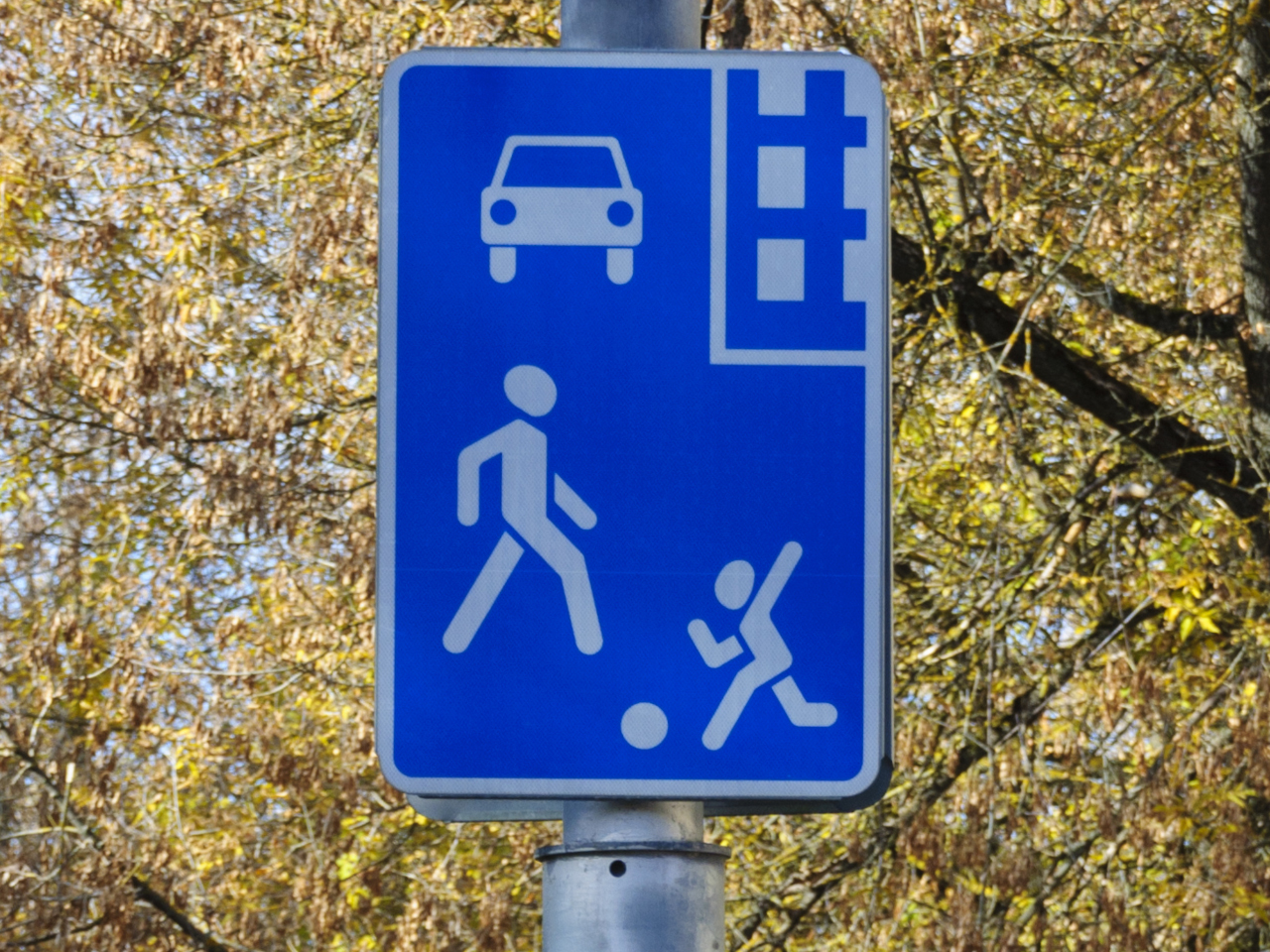
© Wikimedia.org/Antonio Kless, CC BY-SA
4. Built-up area
A built-up area is a place where there are lots of buildings, people, and activity — basically, any area that looks and feels like a town or city.
- Lower speed limits usually apply (e.g. 30–50 km/h or 20–30 mph).
- You’ll see more pedestrians, cyclists, and parked cars.
- Need to be extra careful at crossings, junctions, and near schools.

Begin of a built-up area. (Bahtšisarai, Russia) © Wikimedia.org/Aleksander Kaasik, CC BY-SA
5. Zone
A zone refers to an area on the road where certain traffic laws or restrictions apply. Ignoring zone rules can lead to fines, points, or even accidents
- Speed Zone – has a specific speed limit.
- School Zone – reduced speed when near a school.
- Parking Zone – controls where and how long you can park.
- Residential Zone – lower speed, watch for children.
- Low Emission Zone – limits access for polluting vehicles.

6. Speed limit
A speed limit is the maximum speed you are legally allowed to drive on a road. It helps keep drivers, passengers, and pedestrians safe by reducing the risk of accidents. Always adjust your speed for weather, traffic, and road conditions — even if you're below the speed limit!
- Helps prevent accidents.
- Gives drivers more time to react.
- Keeps traffic flowing smoothly.
- Protects people in areas like school zones or construction sites.

© Wikimedia.org/Дмитрий Cкляренко, CC BY
7. Footpath
A footpath (or sidewalk) is a designated path for pedestrians, usually alongside a road. Traffic rules for footpaths ensure the safety of pedestrians and maintain order in urban areas.
- No driving or parking on footpaths – Vehicles are not allowed to obstruct pedestrian paths.
- No riding bicycles or motorcycles (unless marked as a shared path).
- Give way to pedestrians at crossings – Always stop or slow down near footpath exits.
- Use the footpath only for walking – Do not walk on the road unless necessary.
- Keep to the left/right (depending on local rules) to allow smooth pedestrian flow.
- Do not block the path – Avoid standing in groups that obstruct others.

A path for pedestrians. (Nizhny Novgorod, Russia) © Wikimedia.org/Antonio Kless, CC BY-SA
8. Bike path
A bike path (also called a cycling path or bike lane) is a designated pathway for bicycles, separate from motor vehicle traffic. It provides a safe and dedicated space for cyclists, reducing the risk of accidents with cars and pedestrians. Bike paths promote safe, eco-friendly transport and reduce traffic congestion!
- Rules for cyclists:
- Ride in the correct direction (following traffic flow).
- Yield to pedestrians on shared paths.
- Follow traffic signals and signs.
- No reckless riding (e.g., speeding, sudden turns).
- Rules for pedestrians:
- Stay off dedicated bike lanes unless marked as a shared path.
- Cross bike lanes carefully at intersections.
- Rules for motorists:
- Do not park or drive in bike lanes.
- Yield to cyclists at crossings.

Path for cyclists. (Novosibirsk, Russia) © Wikimedia.org/К.Артём.1, CC BY-SA
9. Bridge
Bridges are critical and sensitive road structures, so specific traffic rules are enforced to ensure safety, stability, and smooth traffic flow. Bridges have limited space, structural limits, and unique risks (wind, congestion, accidents). Following these rules keeps everyone safe and prevents damage to the bridge.
- Obey Speed Limits - Speed is often lower on bridges due to narrow lanes, curves, or structural limits.
- No Overtaking - Do not overtake or change lanes while on a bridge unless explicitly allowed.
- No Stopping or Parking - Stopping, standing, or parking on a bridge is strictly prohibited, except in emergencies.
- Obey Weight Limits - Heavy vehicles must follow maximum weight restrictions to prevent damage to the bridge structure.
- Use Designated Lane - Follow lane markings. Some bridges may have special lanes for bicycles, pedestrians, or emergency vehicles.
- No U-Turns or Reversing - U-turns and reversing on a bridge are usually not allowed and can cause accidents.
- Watch for Crosswinds - Pay attention to wind warning signs on high or open bridges.
- Follow Traffic Signals & Barriers - At railway or movable bridges (drawbridges), stop when barriers are down or signals are red.

Warning for a movable bridge. (Vologda Oblast, Russia) © Wikimedia.org/Road Sign Series, CC BY
10. Speed bump
A speed bump is a traffic calming device that use vertical deflection to slow motor-vehicle traffic in order to improve safety conditions. Variations include the speed hump, speed cushion and speed table. These designs all help keep speeds safe and roads friendly for people, especially in busy or residential areas.
- Slow down to about 10–20 km/h (5–15 mph).
- Going too fast can damage your car or feel very uncomfortable.
